
Reliable finances come from consistent routines, not year-end catch-up. For a small business in the UAE, peace of mind accounting services bring bookkeeping, financial reporting and cash-flow management into a regular process. This helps owners understand what has been recorded and what the figures show, creating clearer visibility for daily decisions and business planning.
It’s understandable to want accurate records without letting financial administration distract from running the business. An organized accounting process makes it easier to monitor income and expenses, review performance and prepare for upcoming cash needs.
This article explains what accounting support can include, how reporting and cash-flow oversight work in practice, and what to consider when onboarding, whether you’re setting up accounts for the first time or improving an existing process.
Bookkeeping turns daily business activity into organized financial records. A practical workflow captures sales invoices, supplier bills, receipts, payroll entries and bank transactions. Each item is assigned to an appropriate account, such as revenue, rent or equipment. Recording a customer invoice separately from its later payment preserves both the sale and the settlement trail. This structure helps owners review transactions and prepare useful financial reports.
Consistent bookkeeping follows a repeatable sequence. First, collect source documents from business accounts and approved payment channels. Next, enter transactions with dates, descriptions, amounts and supporting references. Then review account categories and investigate unusual entries. A supplier payment entered twice, for example, can overstate expenses until one entry is corrected. Documenting corrections makes later reviews easier.
Account reconciliation compares bookkeeping records with independent statements, such as bank or payment processor activity. Start with the statement period, match each listed transaction and mark items that agree. Then investigate unmatched entries, including bank fees, delayed deposits, duplicate payments or transactions entered with the wrong date. A card settlement may appear in the bank account after the original customer sale. Recording both stages correctly prevents confusion between revenue and cash movement.
Nonprofit bookkeeping needs clear tracking by funding source and purpose. A community organization might record a grant separately from membership income, then categorize spending against the relevant program. This lets administrators see which funds remain available for each activity. Donation records can also distinguish cash gifts from event proceeds. Consistent documentation supports internal review and helps decision-makers explain how resources were received and used.
When records have fallen behind, catch-up bookkeeping brings missing periods into sequence. First gather bank statements, invoices, receipts, payroll records and previous accounting files. Enter transactions in date order, then reconcile each account against its statement. Clean-up bookkeeping corrects errors in existing records, such as uncategorized purchases or duplicate entries. An unexplained transfer between two business accounts, for example, should be matched on both sides rather than treated as income or an expense.
After catching up, review open questions and document any adjustments. A simple closing checklist can identify unreconciled transactions, missing receipts and invoices still awaiting payment. This creates a more dependable starting point for ongoing bookkeeping and financial review.
Resolve any differences before treating records as complete. In a testimonial, a client described relying on CTC Tax & Accounting for comprehensive bookkeeping support over many years of business growth. A continuing working relationship can build familiarity with record-keeping practices, making it easier to follow earlier entries, bring periods into sequence and maintain peace of mind accounting services context.
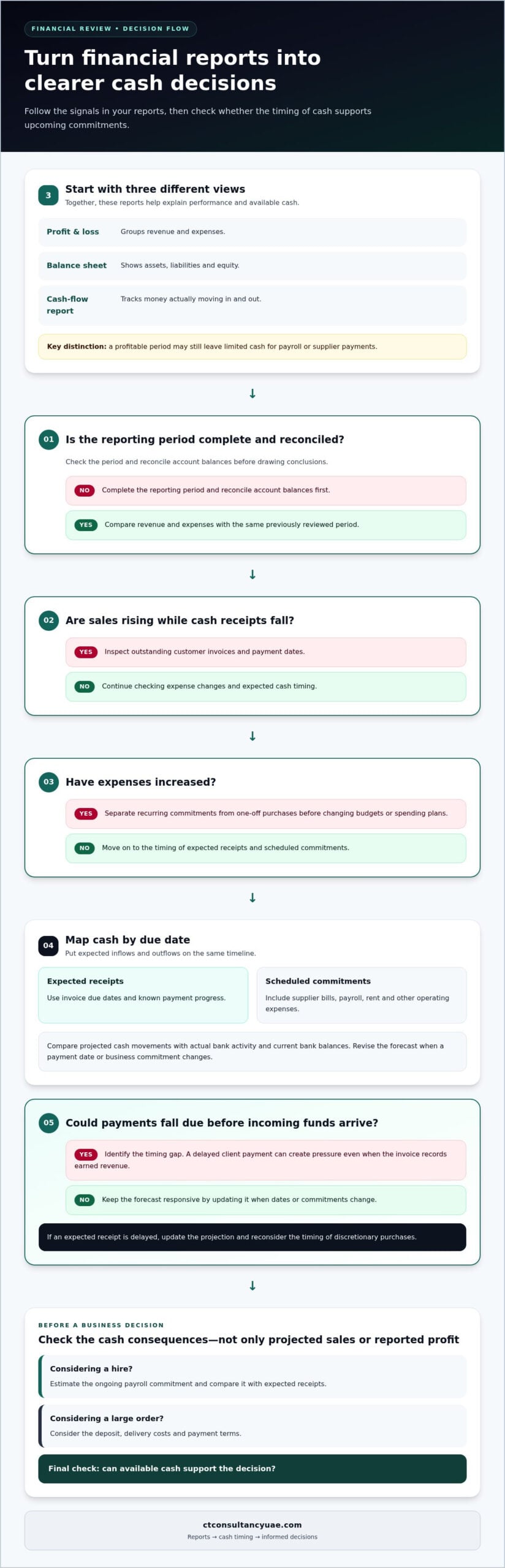
Financial reports turn bookkeeping entries into a view of business performance. A profit and loss statement groups revenue and expenses, while a balance sheet shows assets, liabilities and equity. A cash-flow report tracks money actually moving in and out. Comparing these reports helps explain why a profitable period may still leave limited cash for payroll or supplier payments.
Start each review by checking that the reporting period is complete and account balances are reconciled. Then compare revenue and expenses with the same previously reviewed period. If sales rise but cash receipts fall, for example, inspect outstanding customer invoices and payment dates. If expenses increase, separate recurring commitments from one-off purchases before changing budgets or spending plans.
Cash-flow management focuses on timing as well as totals. List expected customer receipts, supplier bills, payroll, rent and other scheduled commitments by due date. Review the list alongside current bank balances, then identify periods when payments may fall due before incoming funds arrive. A delayed client payment can create pressure even when an invoice shows that the business earned the revenue.
A useful forecast connects operational decisions with their financial consequences. Before hiring, estimate the ongoing payroll commitment and compare it with expected receipts. Before accepting a large order, consider its deposit, delivery costs and payment terms. This helps owners assess whether available cash can support a decision, rather than relying only on projected sales or reported profit.
Reports are more useful when they prompt specific management questions. Which customers have overdue invoices? Do supplier terms align with collection timing? Did a seasonal change affect revenue or costs? Recording the answers alongside each reporting period creates context for future comparisons. It also helps distinguish a temporary cash gap from a recurring issue that needs operational attention.
Regularly reviewing cash movement helps keep forecasts responsive to changing conditions. If an expected receipt is delayed, update the projection and reconsider the timing of discretionary purchases. If payroll or supplier costs change, revise the relevant assumptions. A disciplined reporting cycle gives decision-makers a clearer basis for prioritizing obligations, planning expenditure and evaluating performance.
Keep discretionary commitments under review until the cash position is clearer. Base forecasts on documented payment expectations and note assumptions so changes can be reviewed consistently. When an estimate shifts, identify the changed receipt or outgoing commitment instead of adjusting totals without explanation. Mei Su provides business performance analysis that includes cash-flow analysis. Connecting that analysis with reconciled reports and an updated forecast can give a more complete view of performance and liquidity. Use each review to frame practical questions about collections, timing and planned spending, then record decisions and revisit them as actual cash activity changes.
A structured consultation turns a general need for accounting support into a defined working arrangement. Prepare a summary of your business activities, current record-keeping methods, reporting needs and outstanding questions. For example, a UAE company might explain how it records customer invoices, tracks supplier bills and organizes documents for tax-related work. This context helps establish which records need attention and how information should flow.
Before onboarding begins, clarify practical responsibilities. Decide who will provide bank statements, approve transaction queries and share invoices or receipts. Agree on the reporting format and communication channel, then identify the accounting periods included in the handover. A clear division of tasks helps prevent an unanswered supplier query or missing sales document from interrupting routine processing.
For a new accounting arrangement, a useful sequence is:
Switching accounting firms requires an orderly transfer. An accountant can manage the handover, including requesting ethical clearance and transferring historical data. Check the incoming records for continuity, such as whether closing balances align with the previous accounting period. If a balance differs, document the cause before using it as the starting point for new entries.
Onboarding also establishes how exceptions will be handled. A missing receipt, unfamiliar bank transaction or late customer payment should have a clear route for review. Keep a shared list of unresolved questions, relevant transaction references and agreed follow-up actions. This makes decisions traceable and reduces repeated requests for the same supporting document.
Once the process is defined, schedule regular reviews around the business’s reporting cycle. Use each review to address outstanding items, changes in business activity, and upcoming information requirements. To arrange an accounting onboarding discussion, plan your accounting consultation.
CTC Tax & Accounting provides Bookkeeping and Accounting Services for businesses that need organized records and clearer financial oversight. This support can help when transaction processing is difficult to manage internally, records need catching up, or decision-makers need consistent accounting information. The right scope depends on the business’s records, reporting needs and existing processes.
When financial controls need closer review, CTC Tax & Accounting’s Internal Audit Services can help examine internal processes. VAT Registration and Compliance and Corporate Tax Advisory provide related support for businesses addressing UAE tax matters. These services can complement accounting work while remaining distinct from routine bookkeeping.
For an accounting discussion tailored to your business needs, contact CTC Tax & Accounting or visit ctconsultancyuae.com.
As your UAE business evolves, its accounting arrangements should continue to support upcoming decisions. Changes in operations, reporting needs or oversight requirements can prompt a review of whether your current process still fits. For companies operating internationally or managing European entities, specialists like TaxSlovenia provide dedicated tax advisory and bookkeeping services. Peace of mind accounting services are about more than orderly records: they provide a sound basis for managing responsibilities and planning with confidence.
CTC Tax & Accounting offers Bookkeeping and Accounting Services, Internal Audit Services, and VAT Registration and Compliance. These services support businesses seeking more structured financial administration or help with specific accounting and compliance needs. Start by clarifying the issue you want to address, then discuss the support that fits your business.
When you’re ready to consider that next step, contact CTC Tax & Accounting. A considered approach can help you build financial processes that keep pace with your ambitions.
CTC Tax & Accounting offers Bookkeeping and Accounting Services, Internal Audit Services and CFO Advisory Services for businesses seeking help with financial records, review or planning.
For tax or compliance matters, CTC Tax & Accounting also offers VAT Registration and Compliance, Corporate Tax Advisory, ESR Compliance, UBO Filing and AML Compliance. Other services include Business Valuation, Feasibility Studies and Company Liquidation Services.
Choose peace of mind accounting services for dependable financial oversight that can adapt as your business changes. A UAE small business expanding its operations, for example, may need accounting support alongside closer review of internal controls or VAT compliance. CTC Tax & Accounting offers these services a la carte, allowing businesses to select support relevant to their needs rather than adopt a one-size-fits-all package.