
A bookkeeping error can cost more than the time saved by managing records yourself. The dangers of DIY bookkeeping include inaccurate financial reports, incomplete records that complicate UAE compliance, and mistakes that may affect VAT records or tax preparation. As transactions and reporting needs grow, small inaccuracies can also make it harder to understand cash flow and make informed business decisions.
Doing the books in-house can feel like a practical way to stay close to your finances, particularly when a business is still finding its footing. The risk is that inconsistent classifications, missing documentation or delayed updates can leave you relying on figures that do not clearly reflect the business. This article explains how those errors can affect financial reporting, compliance, tax claims and deductions, and outlines when professional bookkeeping support may help. You’ll also see the signs that your records need closer attention, so you can make a considered decision about the right level of support for your business.
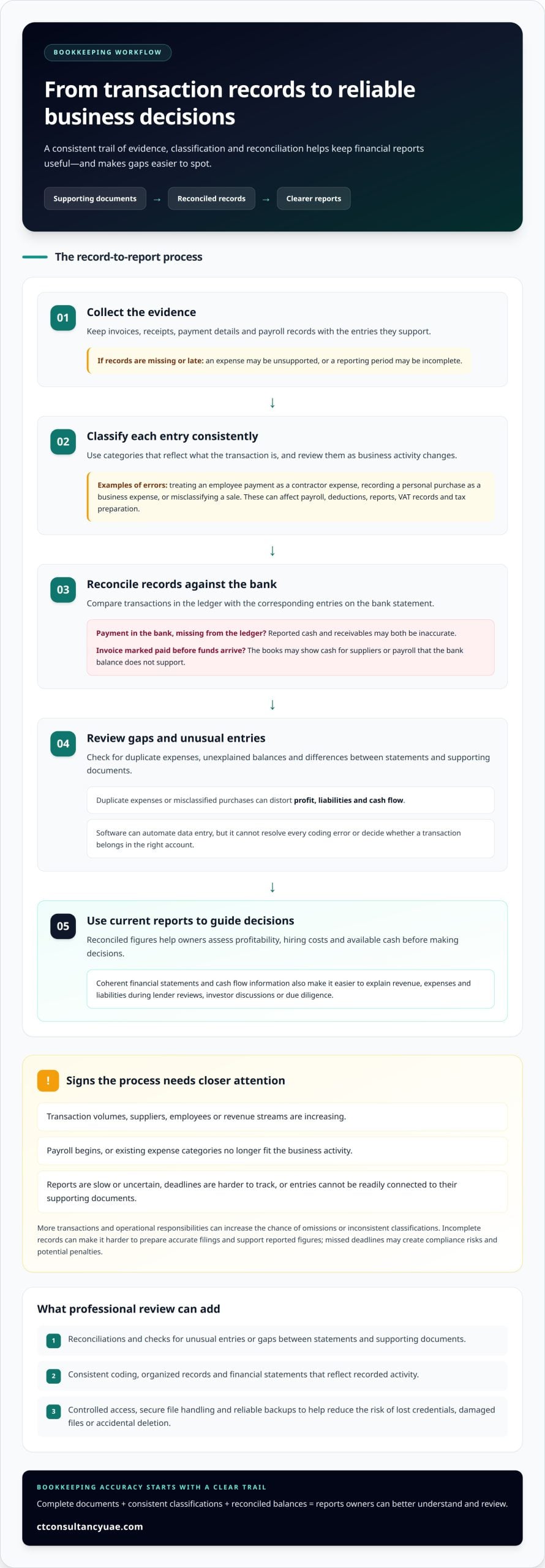
Bank reconciliation compares transactions in your records with the corresponding bank statement entries. If a customer payment appears in the bank but not the ledger, reported cash and receivables may both be inaccurate. Duplicate expenses or misclassified purchases can also distort profit, liabilities and cash flow reports. These are practical dangers of DIY bookkeeping: records may look complete while still presenting an inaccurate financial position.
For example, a business might record an invoice as paid before the customer transfers the funds. Its books may then show enough cash for supplier invoices or payroll, even though the bank balance tells a different story. Inaccurate reports can lead owners to delay collections, approve spending they cannot afford or set prices using incomplete expense data. Current, reconciled figures help assess profitability, hiring costs and available cash before making decisions.
Bookkeeping mistakes can also complicate financing discussions. A lender reviewing inconsistent balances or unexplained transactions may find it harder to assess repayment capacity. Investors also rely on coherent financial statements and cash flow information; missing invoices or unreconciled accounts can undermine confidence during reporting or due diligence. Accurate records make it easier to explain how revenue, expenses and liabilities fit together.
As a business grows, more transactions, suppliers, employees and revenue streams increase the chance of omissions or inconsistent classifications. Software can automate data entry, but it cannot resolve every coding error or determine whether a transaction belongs in the right account. Outdated records can obscure late customer payments or recurring expenses. A structured review helps keep reporting useful as operations become more complex.
Professional bookkeeping helps reduce errors through account reconciliations, reviews of unusual entries and checks for gaps between statements and supporting documents. For financial data protection, controlled access, secure file handling and reliable backups can help reduce the risk of lost credentials, damaged files or accidental deletion. A consistent review process supports accurate reporting and gives business owners a clearer basis for decisions about cash, costs and growth.
Incomplete financial records can make it harder for a UAE business to prepare accurate filings and support reported figures. A missing supplier invoice, for instance, may leave an expense unsupported, while a late entry can make a reporting period incomplete. When receipts, invoices and payroll records accumulate, deadlines are easier to overlook, creating compliance risks and potential penalties.
Classification matters. Treating an employee payment as a contractor expense, or recording a personal purchase as a business expense, can distort payroll, deductions and financial reports. Misclassifying sales transactions may also affect VAT records and the figures used for tax preparation. These errors can leave a business with inconsistent supporting documents when it needs to explain reported amounts.
As operations expand, more suppliers, employees, revenue streams and transactions increase bookkeeping demands. Payroll adds recurring records, while changes in business activity can make earlier expense categories unsuitable. If reports arrive late or records remain incomplete, owners may struggle to identify upcoming obligations and prepare information on time. The risk grows when one person handles bookkeeping alongside several operational responsibilities.
Tax rules and filing requirements can change, so outdated assumptions may lead to incorrect records or missed deadlines. A missed filing or overlooked obligation can expose a business to penalties, while inaccurate records can make tax preparation more time-consuming. VAT support can help align transaction records with reporting needs and applicable UAE regulations.
Consider professional bookkeeping or accounting support when transaction volumes rise, payroll begins, several income streams emerge, or reporting becomes slow and uncertain. Timely support can help identify classification gaps and organize records before deadlines approach. It is especially useful when you cannot readily connect recorded expenses, payroll entries and sales figures to their supporting documents.
Professional accounting support adds review, consistency and interpretation that software alone cannot provide. A bookkeeper can assess coding, reconcile supporting documents, identify unusual balances and prepare financial statements that reflect recorded activity. For example, recurring supplier charges can be classified consistently, while unexplained changes are investigated before management relies on the reports.
Handling every task internally may seem to save money, but the cost can include hours spent correcting spreadsheets, researching accounting treatments and rebuilding incomplete records. That time could otherwise go toward sales, service delivery or operational planning. Errors may also require extra work later, particularly when financial statements need adjustments before a filing, funding request or management review.
Professional support can help with reconciliations, complex expense classifications, payroll records, financial reporting and entries that do not match supporting documents. In-house staff can provide invoices, receipts, payment details and explanations of unusual transactions; a bookkeeper can organize and review them. This approach keeps operational knowledge close while assigning technical accounting work to a specialist.
Structured accounting also gives business owners clearer information about cash flow, liabilities and changing costs. Separating recurring overhead from one-off purchases, for instance, makes monthly comparisons more useful. As revenue streams or supplier relationships expand, consistent categories help management see which activities drive performance, rather than relying on spreadsheets with inconsistent formulas or labels.
Choose support according to the complexity and reporting demands of the business. A small operation with straightforward transactions may need a different level of review from a growing company with payroll, multiple revenue streams or regular financing discussions. Professional accounting services can bring bookkeeping and reporting into a consistent process, helping owners spend less time resolving records and more time applying reliable information to business decisions.
Incomplete expense records can lead business owners to overlook costs when assessing profit or preparing tax information. For example, a supplier invoice filed separately from transaction records may not be reflected in the accounts. Missing documents can also make it harder to explain how an expense relates to business activity, reducing the accuracy of reported figures.
GST/HST Input Tax Credits belong to Canada’s tax system, not the UAE’s. UAE businesses should distinguish those Canadian claims from their own VAT records and applicable reporting requirements. Mislabelled transactions or missing invoices can affect the figures used to assess VAT obligations, while overlooked costs can distort profit analysis. Accounting software can organize entries, but it cannot resolve every classification or documentation issue on its own.
Missing records may also delay tax preparation. If receipts, invoices or transaction details are incomplete near a filing deadline, owners may need to spend time locating documents and correcting accounts. Late or inaccurate reporting can create compliance risks, including penalties when obligations are not met. Organized records make it easier to identify gaps before they grow.
The effects extend beyond tax. If expenses are understated, management may overestimate profit and make growth decisions based on incomplete information. A business, for instance, could commit to additional hiring or expansion without accounting for recurring supplier costs. Accurate transaction records help owners distinguish available cash from apparent profit and assess whether planned spending fits current performance.
Experts can review expense classifications, supporting documents and reporting records, helping identify omissions that accounting software may not flag. Outsourcing can be particularly useful when transaction volumes rise, deadlines become difficult to manage, or financial information needs substantial cleanup. Arrange professional accounting support to bring expense records and reporting into a more consistent process.
CTC Tax & Accounting provides Bookkeeping and Accounting Services for businesses that need consistent records, clearer reporting or support as transactions grow. Its team can also provide Internal Audit Services to review financial processes, alongside VAT Registration and Compliance and Corporate Tax Advisory for related reporting needs.
Consider professional support when unreconciled records, changing transaction volumes or unclear expense classifications make business figures difficult to rely on. Organized accounts can help owners understand their financial position and prepare information for relevant business and tax reporting. The right support depends on the records, activity and reporting requirements involved.
For support with bookkeeping and accounting needs, contact CTC Tax & Accounting.
Reliable bookkeeping does more than record past activity; it creates a consistent foundation for future business decisions. The dangers of DIY bookkeeping can persist when informal processes continue as transactions, reporting needs and compliance responsibilities change. A timely review can identify which records need attention and where a more structured accounting approach could help.
CTC Tax & Accounting supports businesses through Bookkeeping and Accounting Services, Internal Audit Services, and VAT Registration and Compliance in accordance with UAE regulations. The right focus depends on your records and business requirements, whether you need ongoing bookkeeping, a review of internal processes or help aligning VAT records with reporting needs. A considered approach can help you move forward with greater clarity.
Contact CTC Tax & Accounting to discuss support for your bookkeeping and accounting needs. A sound financial process can give you a clearer basis for the next stage of business growth.
The dangers of DIY bookkeeping include relying on records that have not been properly reviewed, especially as business activity becomes more complex. A duplicated customer receipt, an overwritten spreadsheet formula or a transaction entered in the wrong period can affect later reporting. The risk is not limited to one mistake: errors may carry into forecasts, management reports and information prepared for lenders or investors.
Common risks include inconsistent transaction coding, incomplete supporting documents, delayed updates and weak version control. For example, if two people edit separate spreadsheet copies, one may record a supplier payment while the other uses an older file. This can complicate later review and leave an unclear audit trail. As operations expand, informal processes become harder to maintain across suppliers, revenue streams and reporting periods.
Bookkeeping errors or missed filing deadlines can expose a business to penalties if they result in an unmet tax obligation. The consequences depend on the filing, the nature of the error and the business’s circumstances. Incomplete records can make it harder to prepare accurate tax information on time or explain reported figures. Organize records by reporting period so missing documents can be identified before a filing is due.
Professional bookkeeping fees depend on transaction volume, the condition of existing records, reporting frequency and the scope of support, with pricing provided after a quote request. Software subscription costs vary by plan, so a direct comparison should account for more than the software alone. DIY also uses the owner’s time, while professional support can include review, reconciliations and reporting that software access itself does not provide.
DIY may suit straightforward transaction entry and organizing invoices, receipts, payment details and explanations of unusual transactions. Leave reconciliations, complex expense classifications, payroll records, financial reporting and entries that do not match supporting documents to a professional.