
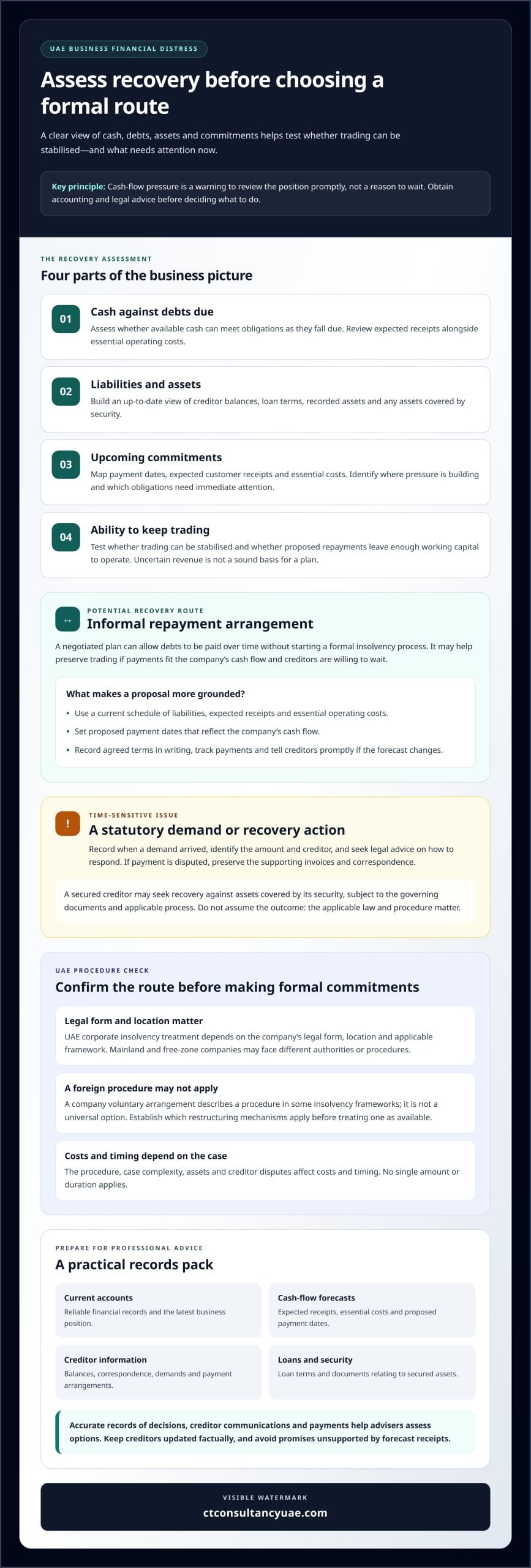
Cash-flow pressure is a warning to act, not a reason to wait. If your business can’t meet debts as they fall due, review its financial position promptly and seek accounting and legal advice before deciding what to do when your business is insolvent. This is an important first assessment, though the right legal response depends on the circumstances and the rules that apply in the UAE.
It’s understandable to want certainty before taking action. A careful review of cash flow, liabilities, assets and upcoming commitments can clarify whether the business may recover, which obligations need immediate attention and whether continuing to trade could increase the risks.
This article explains how to assess financial distress, consider recovery and restructuring options, and recognise when liquidation may need to be considered. It also shows how timely accounting and legal advice can support informed decisions, with clear records and a realistic view of the company’s position at the centre of the process.
Recovery may remain possible if trading can be stabilised and creditors accept a workable plan. Start by assessing whether available cash can meet obligations while protecting company assets.
An informal repayment arrangement is a negotiated plan for paying creditors over time without starting a formal insolvency process. It may help preserve trading if payments fit the company’s cash flow and creditors are willing to wait. Prepare an up-to-date schedule of liabilities, expected receipts, essential operating costs and proposed payment dates. For example, propose a smaller instalment now and a defined review point after expected customer receipts arrive. Record agreed terms in writing, track payments and tell creditors promptly if the forecast changes.
Creditor recovery action can include formal steps to collect overdue debts. A statutory demand is a formal demand, and its consequences depend on the applicable law and procedure. Treat every demand as time-sensitive: record when it arrived, identify the amount and creditor, and obtain legal advice on how to respond. If you dispute the payment, preserve supporting invoices and correspondence. A secured creditor may seek recovery against assets covered by its security, subject to the governing documents and applicable process. If recovery or restructuring fails, compulsory liquidation may follow a formal process. Company assets are then dealt with for creditors, while employee claims depend on applicable rules.
Professional advice can help directors test whether recovery assumptions are credible before taking further action. Share current accounts, cash-flow forecasts, creditor balances and security documents with accounting and legal advisers. Give creditors a factual update, your proposed payment position and a way to discuss concerns. Avoid promises the business cannot support with forecast receipts. Accurate records of decisions, creditor communications and payments help advisers assess options and identify transactions that may expose assets to challenge.
UAE corporate insolvency and bankruptcy treatment depends on the company’s legal form, location and applicable framework. Mainland and free-zone companies may face different authorities or procedures, so confirm the governing route before filing. For liquidation or bankruptcy proceedings, directors typically need advice on the correct application, supporting financial records and relevant authority or court. Costs and timing depend on the procedure, case complexity, assets and creditor disputes, so no single amount or duration applies. Assemble accounts, liabilities, cash-flow information and creditor demands, then obtain accounting and legal advice. Give creditors a clear update while advisers assess recovery, restructuring or liquidation. A secured creditor’s rights over collateral and the handling of employee claims depend on the applicable process.
A company voluntary arrangement is a formal proposal to address business debts through an agreed repayment plan. The term describes a procedure in some insolvency frameworks, not a universal option. A UAE company should establish which restructuring mechanisms apply to its legal form and jurisdiction before treating a voluntary arrangement as available. This distinction matters because a plan’s effect on creditors depends on the governing process.
Before considering a repayment proposal, directors need a realistic view of the company’s obligations, cash position and ability to keep operating. Review expected receipts alongside essential costs and unpaid liabilities, then assess whether proposed instalments leave enough working capital to trade. A plan that relies on uncertain revenue or delays payment without creditor agreement may deepen financial pressure rather than resolve it.
Financial difficulty may show up as repeated late payments, a shrinking cash balance, mounting supplier arrears or liabilities exceeding recorded assets. These signs call for a broader assessment, not an automatic conclusion. Directors should gather current accounts, loan terms, creditor correspondence and details of secured assets. Accurate records help distinguish temporary cash-flow timing problems from a sustained inability to meet commitments.
Directors should make informed decisions with the company’s financial position and creditor exposure in view. Before proposing changes to payment terms, assess the impact on secured and unsecured creditors, ongoing operations and any formal demands received. Record the assumptions behind forecasts and decisions in writing. If a proposed restructuring cannot support continued trading, compare it with an orderly winding-up process under the applicable UAE framework.
For UAE businesses, the practical next step is to obtain advice on which procedures apply before making commitments based on a foreign arrangement. An adviser can help organise financial information and evaluate whether a repayment proposal is commercially credible. Explore accounting support to clarify the figures informing those decisions.
Administration, receivership and voluntary administration describe different processes, but their availability and effects depend on the applicable UAE framework. A company should not assume that a procedure used abroad provides protection locally.
Business restructuring changes a company’s operations or financial commitments to address distress and assess whether trading can continue. Options may include refinancing, revising business activities or considering a formal insolvency process. Compare the cash needed to keep operating with realistic receipts and creditor obligations. This helps directors assess whether restructuring could support a viable business or whether winding up needs consideration.
Administration generally describes a process in which an appointed office-holder examines a company’s position and possible outcomes. A moratorium is a temporary restriction on specified creditor actions, but its scope depends on the relevant law and procedure. UAE businesses should establish whether any protection applies to their entity and circumstances, including which claims or assets it covers. Do not assume creditor action automatically stops while a restructuring proposal is considered.
Voluntary administration is a formal process in some jurisdictions in which an administrator takes control to assess whether a company or its operations can be saved. It is not a general term for every UAE restructuring route. Before considering an appointment, directors should obtain professional advice on the company’s governing framework, required consents and effects on creditors. Assess whether continuing operations could produce a better outcome than immediate winding up, and what happens if creditors do not support a proposed arrangement.
Receivership is a distinct process commonly associated with a secured creditor enforcing rights over particular assets. The receiver’s authority and the treatment of those assets depend on security documents and applicable UAE procedures. Directors should review the relevant agreements and obtain advice before making decisions that could affect secured or unsecured creditors.
Seek accounting and legal advice as soon as you suspect financial difficulty, before a missed payment leads to formal creditor action. An accountant can assess whether cash flow covers obligations and whether reported assets reflect their recoverable value. A legal adviser can explain the procedures relevant to the company’s jurisdiction, legal form and creditor agreements. Together, they help directors understand the situation before choosing a response.
Ask the accountant to prepare a short-term cash-flow forecast, review liabilities and reconcile recent transactions against bank statements. A 13-week forecast can reveal when cash shortages may arise and whether proposed creditor payments are affordable. For example, expected customer receipts should be compared with payroll, rent, tax obligations and supplier invoices, not treated as available cash before collection. Accurate records also help distinguish disputed balances from debts that are due.
Legal advice should clarify the effect of security documents, statutory demands and any formal notices received. A secured creditor may have rights over specified assets, while an unsecured creditor’s position depends on applicable law and agreements. Ask counsel to explain response deadlines, possible recovery action and the consequences of continuing to trade or transferring assets. These matters depend on the relevant UAE framework and the company’s circumstances, so do not rely on procedures described for another country.
Before appointing an insolvency practitioner or considering liquidation, directors can ask advisers to assess whether restructuring is viable and what information creditors will need. Provide current accounts, creditor correspondence, loan terms, asset records and a list of unpaid obligations. Keep written notes of advice received and decisions made, including the financial evidence supporting each decision. This creates a clearer basis for creditor discussions and helps identify gaps requiring further analysis.
For dependable records that support this assessment, review bookkeeping and accounting support as part of the company’s response to financial distress.
CTC Tax & Accounting can help business owners assess company value when weighing restructuring, continued trading or liquidation. A business valuation provides a structured view of factors affecting worth, which can inform discussions about assets, liabilities and possible recovery options. It does not replace legal advice or determine which insolvency procedure applies.
Reliable financial records support a more useful assessment. CTC Tax & Accounting’s Bookkeeping and Accounting Services help organise transaction records and financial statements, while its Internal Audit Services can identify control or reporting issues that need attention. These insights can help directors make informed decisions and explain the company’s position to relevant stakeholders.
Consider valuation support when you need a clearer basis for evaluating the business or comparing possible paths forward. Contact CTC Tax & Accounting to discuss your business valuation needs.
The next step is to turn concern into a documented decision process. For owners deciding what to do when your business is insolvent, a current view of cash commitments, reporting gaps and decision deadlines can keep discussions focused. Assign responsibility for maintaining records and documenting decisions so the financial information remains useful as circumstances change.
CTC Tax & Accounting supports the financial work behind this process through Bookkeeping and Accounting Services, Internal Audit Services, and VAT Registration and Compliance, performed in accordance with UAE regulations. These services help organise records, examine financial controls and address VAT compliance needs, giving decision-makers a structured basis for their next steps.
Choose the support that fits the immediate financial task, and keep legal questions with qualified legal advisers. Contact CTC Tax & Accounting to discuss the accounting support relevant to your situation. A deliberate, well-documented next step can help you move forward with greater clarity.
One missed payment alone cannot establish the company’s full financial position. Ask an accountant to reconcile bank balances, unpaid invoices, loan obligations and expected receipts, then compare available cash with commitments falling due. A legal adviser can assess how the relevant UAE framework applies to those facts. Delayed customer payments, for example, may explain a short-term gap, while repeated shortfalls across obligations may point to deeper distress.
In general financial terms, insolvency describes a business unable to meet debts as they fall due, though the applicable legal test depends on jurisdiction and company circumstances. A balance sheet showing liabilities above assets can also indicate financial strain, but does not tell the whole story. Asset valuation, payment timing, disputed debts and available funding all affect how to interpret the position.
Start by identifying which activities generate reliable cash and which use resources without supporting viable operations. A business might renegotiate supplier terms, pause non-essential spending, pursue overdue customer invoices or review whether a different operating model is sustainable. Model each option against realistic receipts and obligations before committing. Restructuring works only if the proposed changes address the underlying shortfall and leave a credible path to meeting commitments.
Keep business records intact and avoid informal asset transfers or undocumented payments while assessing the position. Create a decision record showing the information considered, advice received and reasons for major actions. Keep company funds separate from personal spending, and respond promptly to creditor correspondence rather than letting demands accumulate. If a formal notice arrives, note its date and preserve it for legal review, since procedures depend on the applicable framework.
If you’re deciding what to do when your business is insolvent, first distinguish an immediate cash shortage from a business model that cannot support its costs. Review customer concentration, margins, recurring expenses and the timing of receivables. For example, strong sales may still leave a company short of cash if customers pay late while supplier invoices fall due earlier. Use this analysis to assess practical changes before accepting new commitments.
Act promptly: preserve financial documents, list upcoming payments and arrange an accounting and legal review. Bring creditor letters, loan agreements, recent management accounts and records of significant transactions to the assessment. Avoid promising payment dates without a cash basis, and give affected creditors factual updates. These steps help clarify immediate priorities and support a reasoned decision about restructuring, continued trading or an orderly closure.