
A profitable business can still run short of cash. Financial clarity for business owners in the UAE comes from regularly reviewing cash flow, profitability, expenses and overall performance. Start with three core reports: the profit and loss statement, balance sheet and cash flow statement. Each shows a different part of your financial position.
Sales figures and your bank balance matter, but neither tells the whole story. Revenue may be recorded before a customer pays, while expenses and tax obligations affect the cash available for day-to-day decisions.
This article explains what each report reveals and which measures can guide pricing, collections and spending decisions. It also covers practical review routines and how accurate, up-to-date records support financial management and UAE tax compliance.
Review the reports together: each answers a different question about profit, assets, liabilities and available cash. In the UAE, connect this review to tax filing and forward planning, rather than relying on the closing bank balance alone.
A profit and loss statement summarises revenue and expenses over a period to show whether operations generated a profit. A balance sheet presents assets, liabilities and equity on a specific date, while a cash flow report tracks money received and paid. Comparing all three explains why recorded profit may not match available cash, especially when customer invoices remain unpaid.
For VAT, returns are due within 28 days of the end of each tax period. Include VAT activity in your accounting and filing calendar, and align the records with your registration position and applicable treatment.
Keep financial statements and supporting records for seven years if you are a UAE taxable person. Businesses should retain financial records for at least 5 years. UAE financial statements are prepared under IFRS, and accrual accounting is required under IFRS; maintain invoices, receipts, bank records and reconciliations that support reported transactions.
Profit management evaluates whether sales cover direct and operating expenses; cash management tracks when receipts and payments occur. A 60-day credit sale can appear as revenue before cash arrives two months later. Review cash-flow forecasts monthly, or weekly when growth makes timing more consequential. A common reserve guideline is 3-6 months of operating expenses.
Profit First is a cash-allocation approach: divide incoming funds among defined purposes, such as operating costs, tax and profit, then manage spending within the operating allocation. Use this method to spot cost pressures, not as a replacement for accurate accounting. Before committing funds, compare available cash with upcoming payroll, supplier payments and expected collections.
According to the Federal Tax Authority, delayed UAE Corporate Tax registration incurs a fine of AED 10,000. Track registration and filing deadlines alongside cash forecasts so compliance obligations are visible before funds are allocated elsewhere.
For budgets and growth planning, compare actual revenue and expenses with your forecast, investigate variances, then revise assumptions using sales trends, costs and expected collection timing. If operating cash remains negative for two or three consecutive periods, examine the causes and adjust spending or collection priorities.
Keep business and personal bank accounts separate to distinguish company transactions from household spending. This creates a clearer record of business income, owner contributions and withdrawals, helping you assess company performance without personal purchases obscuring operating costs.
For financial years starting on or after 1 June 2023, UAE federal corporate tax is 9% on taxable income above AED 375,000. Businesses must register and file corporate tax returns according to deadlines applicable to their tax periods. Free zone companies must also register and file for every tax period, even when no tax is due.
Free zone status can affect financial planning, but it does not automatically mean all income receives a 0% rate. A Qualifying Free Zone Person that meets the required conditions benefits from a 0% corporate tax rate on qualifying income; non-qualifying income is taxed at the standard rate. Keep records that distinguish income streams and support the relevant tax treatment. Mainland businesses should likewise forecast tax using their taxable income and filing obligations.
Late customer payments can create pressure even when sales appear strong. UAE businesses may give clients 30-, 60-, or 90-day payment terms, while salaries and operating costs fall due immediately. Track receivables by due date and compare expected receipts with upcoming payments. For foreign-currency invoices, monitor the currency and timing of both receipts and supplier obligations; a mismatch can change the AED value available when payments settle.
Start with a dedicated business account, business-only payment methods and regular transaction reviews. Record owner withdrawals separately instead of treating them as operating expenses. If a personal purchase is paid from the company account, document and classify it correctly so management reports and tax filings remain meaningful.
Where corporate tax treatment or filing responsibilities affect your forecasts, corporate tax advisory can help align financial planning with those obligations.
Use report figures to guide decisions by reviewing revenue, direct costs and overhead by product, service or customer segment. A profit and loss statement can show whether a busy service line earns a strong margin after related costs. Compare the results with delivery effort and customer demand before changing prices. If a service regularly uses more labour or materials than expected, reassess its scope, price or delivery process instead of relying on total sales alone.
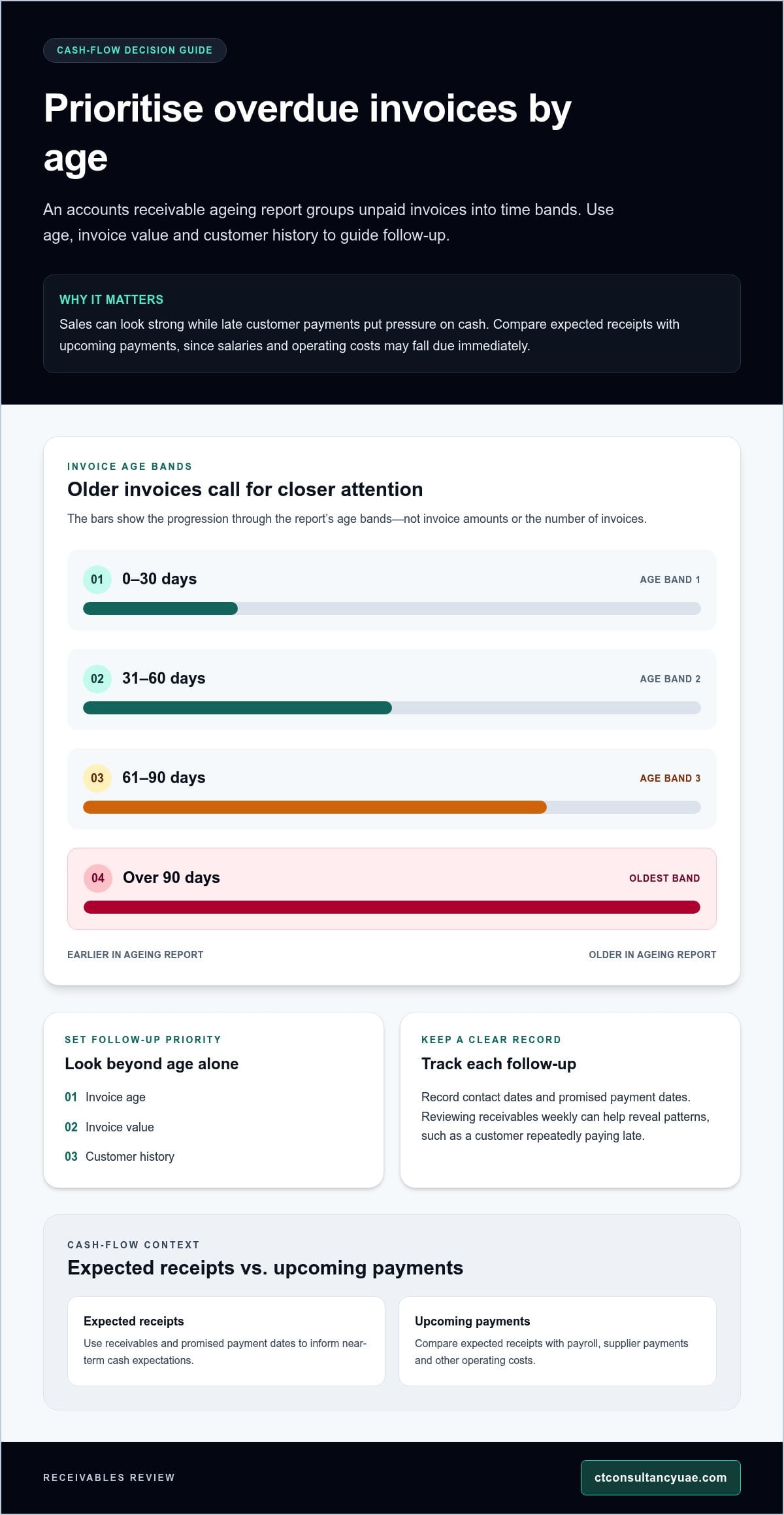
Use an accounts receivable ageing report to prioritise collection activity. A typical report groups unpaid UAE business invoices into 0-30, 31-60, 61-90 and over 90 days. Assign follow-up according to each invoice’s age, value and customer history, then record contact dates and promised payment dates. Reviewing receivables weekly helps identify patterns, such as one customer repeatedly paying late. Those records support a more disciplined conversation about outstanding balances and improve confidence in near-term cash expectations.
Expense reports make spending decisions more specific than a general instruction to cut costs. Review expenses monthly, separating recurring commitments from variable costs and one-off purchases. Compare actual spending with the budget and investigate significant variances by category. Rising delivery costs, for example, might reflect higher order volumes, inefficient routing or supplier changes, each requiring a different response. Before cutting an expense, understand its effect on service quality, revenue and delivery capacity.
Before approving a new commitment, compare its timing and purpose with expected receipts, upcoming obligations and business priorities. Paying a supplier in advance may secure a necessary input, but it also reduces cash available for other spending. Use the cash flow report alongside unpaid invoices and expense records to assess the trade-off. When setting prices, check that proposed rates cover direct costs and contribute to overhead. Revisit assumptions when the customer mix, supplier terms or operating needs change, so decisions reflect current performance.
Useful measures turn accounting records into signals about profitability, liquidity and stability. Start with gross profit margin, operating profit and net profit, and compare each across periods. Gross margin shows what remains after direct costs; operating profit reflects operating expenses; net profit captures the wider financial result. If sales rise while margins fall, increasing costs may be absorbing that growth.
Pair profit measures with cash and working-capital indicators. Operating cash flow shows whether core activities generate cash, while receivables and payables reveal timing pressures. Track expenses against revenue to see which costs are growing faster than income. For example, if a service line earns more but takes substantially more staff time, assess its contribution before expanding it.
Build a short dashboard around specific decisions rather than collecting metrics without context. Record each measure’s definition, data source and review period to keep comparisons consistent. If a result seems unclear, trace it back to invoices, payroll entries or supplier bills. Accurate, current records help you assess profitability, maintain tax compliance and prepare for an audit.
When comparing accounting software with financial advisory services, first assess whether the software produces the records and reports your business needs. Then consider whether you also need expert interpretation and planning. Software supports transaction processing; advisory input can help explain trends, test assumptions and connect metrics to decisions.
A practical financial review connects each metric to an action: investigate a falling margin, examine rising expenses or revisit a growth forecast when cash availability conflicts with reported profit. Avoid relying on one indicator in isolation; compare profitability with cash movement and operating commitments. This gives owners a clearer basis for decisions about investment, staffing and pricing, while keeping the analysis relevant to the company’s structure and objectives. For tailored financial oversight and forward planning, explore CFO advisory services.
CTC Tax & Accounting provides Bookkeeping and Accounting Services to UAE businesses seeking organised records and clearer financial reporting. This support is useful when transaction records are incomplete, reports are difficult to interpret, or routine bookkeeping is taking time away from business decisions.
Businesses reviewing their controls can use Internal Audit Services to assess financial processes. VAT Registration and Compliance and Corporate Tax Advisory support related UAE tax responsibilities. Together, these services help connect consistent records and financial oversight with the business’s compliance and management needs.
Contact CTC Tax & Accounting to discuss the financial support your business needs.
Financial clarity for business owners in the UAE matters most when it informs the next decision, not just the report behind you. Set a regular review time, identify the financial question that matters now, and use reliable records to weigh your options before committing resources. As your business changes, revisit the measures and reporting processes that guide those decisions.
If you want to strengthen financial reporting and oversight, CTC Tax & Accounting can provide support tailored to your business. A focused discussion can help identify where structured accounting, internal review or VAT compliance support would be useful, while keeping operational priorities in view.
Contact CTC Tax & Accounting today to discuss your next step. Consistent financial insight can help you move forward with greater confidence.
Track profitability, cash generation, overdue receivables and expense trends, then interpret them together. Financial clarity for business owners in the UAE starts with understanding how these measures relate. Rising sales can hide weaker margins when delivery costs increase, while unpaid invoices can strain cash despite recorded revenue. Compare results across consistent periods and investigate changes that affect decisions. Focus on measures that explain performance or signal when action is needed.
Separate business and personal transactions, then organise company cash around obligations and priorities. Identify funds needed for operating expenses, payroll, tax commitments and planned investment. Assign responsibility for approving payments and reviewing upcoming commitments. This makes it easier to see what is available for discretionary spending and reduces the risk of treating committed funds as surplus. Clear categories also make financial reviews more consistent.
Manage timing gaps by aligning collection follow-up with payment obligations and forecasting expected receipts. For example, VAT on a sale is generally due for the tax period in which its invoice is issued, potentially before the customer pays. Include this timing in cash planning, track overdue invoices and anticipate delays before committing to supplier or operating payments. A rolling forecast can show when expected inflows may fall short.
A defined financial structure makes growth decisions easier to assess by keeping revenue, costs and responsibilities consistent. Tracking project costs separately, for example, can reveal whether new work uses more resources than expected. Clear approval procedures also show who authorised a commitment and why. As operations expand, these practices make performance changes easier to trace, explain and discuss before further investment.
Financial clarity for business owners in the UAE means having reliable records, understanding what drives results and knowing how current obligations affect available choices. It is more than a positive bank balance or a profitable period. Owners need to distinguish recorded income from cash received, recognise the cost of commitments and understand their tax position. This foundation supports decisions based on the company’s actual financial position and priorities.
Review the profit and loss statement, balance sheet and cash flow report alongside schedules that explain changes. An accounts receivable ageing report highlights overdue customer balances, while a budget-versus-actual report shows where income or spending differs from plan. Check that reporting periods are consistent and investigate significant changes against source records. Together, these reports help management understand what changed, assess its effect and decide where attention is needed.