
You can agree on a partnership buyout value without an appraisal, but a business valuation for a partnership agreement should have a clear, documented basis. The agreement can state a value or set out the procedure and method to use when a partner exits. A negotiated figure may work, but vague wording can invite disagreement as circumstances change.
A number both partners accept may seem sufficient, but a more durable approach is to record how it was calculated, when the valuation applies, and which events trigger a buyout. That gives partners a shared framework instead of leaving important details to assumption.
This article explains when an appraisal may help, how income, market, and asset-based methods can produce different results, and which valuation clauses to address in a UAE partnership arrangement. It also explains how ownership shares, control, and the agreement’s terms can affect the amount assigned to a departing partner.
Start by valuing the partnership as a whole, then assess each ownership interest under the agreement. The right method depends on the business’s assets, earnings, comparable information, and expected cash flow.
Book value is recorded assets minus liabilities. Earnings and market comparisons, by contrast, assess other sources of business value. Book value can provide a useful baseline, but historical costs may not capture brand strength, customer relationships, or future earning potential. An earnings multiple applies a valuation factor to earnings, while a market comparison looks at similar businesses. For a UAE partnership, choose a method that fits the company’s records and commercial circumstances.
An income-based valuation estimates future earnings and discounts them to present value. It may project income using current sales volumes and prices, then account for the timing and risk of future cash flow. This approach is particularly relevant when value depends on the partnership’s ability to generate earnings, rather than only on assets already recorded. Forecast assumptions should reflect operating evidence, not just optimistic growth expectations.
A partner’s ownership interest is assessed after valuing the partnership as a whole, but its proportionate share may not always equal its practical value. For example, an agreed allocation of 60% and 40% divides the enterprise value according to those ownership percentages. Control, transfer restrictions, and limited marketability can affect an individual interest; a silent partner’s limited control may reduce its value. These distinctions matter during a buyout, retirement, or divorce-related ownership change.
Enterprise value is the value of the whole business before it is allocated among co-owners. First, determine the overall value using the selected method. Then apply each partner’s ownership percentage and the agreement’s provisions for control or marketability. Equal ownership, for example, generally means equal pro-rata shares before any relevant adjustments. Partners should also compare the agreed value with any insurance coverage intended to fund a buyout, so the funding arrangement reflects the valuation basis rather than an outdated figure.
Partners can negotiate a buyout price without an appraisal, but documenting its basis helps protect both parties. Set out the valuation method and date in writing, such as the date of the triggering event, the latest fiscal year-end, or another specified date.
A fixed price sets the buyout amount in advance. A formula calculates it using agreed financial measures, while an appraisal relies on valuation analysis. Each method offers a different balance of predictability and responsiveness when ownership interests change hands.
For example, a formula might set value at four times average EBITDA over the last three years. This is straightforward to calculate, but it may overlook changing risk, earnings growth, off-balance-sheet liabilities, or excess cash. An earn-out can tie part of the payment to future performance, so define the performance measure and payment conditions clearly.
Valuation provisions specify the standard, premise, and methods used to calculate the buyout value. Clear terms help the parties apply the same analysis instead of debating assumptions after a partner leaves.
Specify the valuation date, permitted methods, who selects the appraiser, and how the parties will handle different conclusions. The agreement can also state who pays and how long the process should take. These details matter because a formula based on older earnings may produce a different result from an appraisal reflecting current business conditions.
An independent appraisal assesses the business using financial records and relevant commercial factors. It can provide a shared reference when partners disagree about value or a fixed formula no longer reflects the company’s circumstances.
Analysis may consider earnings, growth prospects, comparable businesses, assets, liabilities, excess cash, and risks. Partners can jointly appoint one independent valuation expert and agree in advance to be bound by the conclusion. For a more structured review of business circumstances, business advisory support can help frame the financial information relevant to valuation.
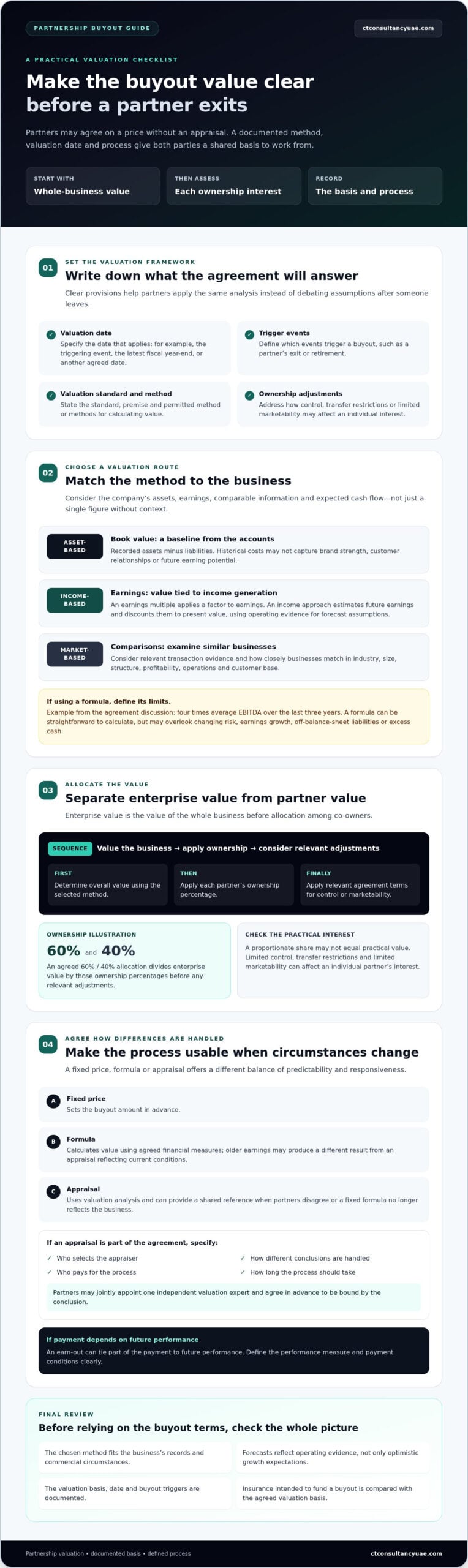
Three common approaches estimate value from earnings, comparable businesses, or net assets. The right analysis depends on the partnership’s records, operations, and the purpose of the valuation, such as a partner’s departure.
A market comparison estimates value by examining similar partnerships and relevant transaction evidence. Industry, size, structure, profitability, operations, and customer base all affect how useful a comparison is.
Use the most recent comparable information available, then assess how closely each business matches the partnership being valued. One similar partnership can provide a basic reference; multiple comparisons may strengthen the analysis. Account for differences in operating model or profitability rather than treating a headline sale figure as directly applicable. This approach estimates market value, not simply the amount recorded in the accounts.
A minority discount reflects limited influence over business decisions, while a marketability discount reflects the difficulty of transferring a private ownership interest. These adjustments can make a partner’s interest worth less than its proportional share of the whole business.
Fair market value may include discounts for lack of control or marketability, while fair value often excludes them. The selected standard therefore matters: the same business can produce conclusions thirty percent apart under different standards and discount treatments.
Market-based valuation uses evidence from comparable businesses. Market capitalization, by contrast, estimates a listed company’s value by multiplying its share price by the number of shares outstanding. This distinction matters because private partnerships generally have no quoted share price to use in that calculation.
For a listed-company reference, multiply its current share price by outstanding shares, then assess whether that market measure helps value the partnership. For private businesses, comparable transactions and earnings multiples may provide more relevant evidence. The income approach instead projects future cash flow and discounts estimated earnings to present value; a discounted cash flow analysis commonly uses an 8-12% rate. An asset approach estimates market value by subtracting liabilities from assets.
A valuation clause turns a partner’s exit into a defined process rather than an improvised negotiation. In the UAE, companies without a shareholder agreement are governed by default provisions of the UAE Commercial Companies Law. Written terms help establish how partners intend to handle valuation and transfer.
A typical buy-sell clause identifies the events that trigger a purchase, the valuation methods, and who may acquire the departing partner’s interest. Triggers may include death, disability, divorce, retirement, resignation, expulsion, or a proposed sale to a third party. If a partner dies without a written succession plan, their interest may pass to their estate or heirs, complicating ownership decisions.
Specify the valuation date, such as the trigger date or latest fiscal year-end, and state whether the method uses earnings, comparable businesses, or assets. The clause should also identify who appoints the valuation specialist, who pays, and how long the analysis may take. These details can prevent disputes about the process from delaying the transfer.
Review the agreed value at least annually, since outdated assumptions may no longer reflect earnings, liabilities, or business conditions. Set out how to resolve different conclusions, whether through one jointly appointed independent specialist or another agreed process. Identify the source of buyout funds and whether payment is due immediately or in instalments. A clause written for retirement may not adequately address death or divorce, so specify the treatment for each trigger.
For UAE businesses, valuation provisions should also account for Corporate Tax and after-tax cash flows. The agreement should distinguish the valuation standard from the calculation method, then state how adjustments apply to the departing partner’s interest. A documented framework can make the intended outcome clearer, although legal drafting should reflect the company’s structure and governing documents. To assess the financial basis for a proposed value, explore business advisory support.
CTC Tax & Accounting can support partners in strengthening the financial records used to assess a business and maintaining a clear view of its performance. Its Bookkeeping and Accounting Services can help organize transaction records, income, liabilities, and cash flow ahead of a valuation review. Internal Audit Services can examine financial controls and records, while VAT Registration and Compliance and Corporate Tax Advisory address relevant compliance and tax matters that may affect financial analysis.
Reliable records give partners a consistent basis for discussing earnings, assets, and valuation assumptions. This support is especially useful when preparing for an ownership change or reviewing information used in the agreement. Contact CTC Tax & Accounting to discuss your accounting and compliance needs.
A business valuation for a partnership agreement is more useful when financial information stays organized as the business evolves. Make valuation readiness part of ongoing governance: keep reporting consistent, document material changes, and ensure partners understand the assumptions behind future decisions. This gives the partnership a stronger basis for reviewing its arrangements when ownership or business priorities change.
CTC Tax & Accounting provides Bookkeeping and Accounting Services to help maintain records, Internal Audit Services to examine financial controls, and VAT Registration and Compliance for relevant UAE obligations. These services can strengthen the financial processes that inform management decisions, without replacing the agreement’s legal terms.
Take a considered next step by discussing the financial support that fits your business. Contact CTC Tax & Accounting to explore how clearer records can support confident planning for your partnership’s future.
CTC Tax & Accounting provides Business Valuation to support partners considering how to address business value in a partnership agreement.
Turn to CTC Tax & Accounting when you need a business valuation for this process. Bookkeeping and Accounting Services and CFO Services are also available for related accounting and advisory needs.
No. Discounts do not apply automatically to every buyout. Their use depends on the valuation standard in the agreement and the interest being transferred. A controlling stake and a non-controlling stake can carry different economic influence, while transfer restrictions may affect marketability. Distinguish adjustments to the whole-business value from those applied only to an individual interest.
Yes. Client concentration and expected future revenue affect the business’s earnings outlook. If a departing partner manages key accounts, for example, the valuation analysis should examine whether those relationships will remain with the business and how their loss could affect cash flow. The parties should also distinguish client-related risk from any contractual rights or restrictions governing the transfer.
Normalize owner earnings by separating recurring business costs from personal, unusual, or non-operating items in the records. A one-off expense, for example, should be assessed differently from a cost that will continue after the owner leaves. Also consider whether owner compensation reflects the work performed and whether the remaining business will need replacement management.
A discount reduces the value assigned to an ownership interest after the valuation basis and relevant adjustment have been defined. Limited influence over decisions may affect a non-controlling interest, while transfer restrictions may affect marketability. State the value before adjustment, identify each discount, and explain its rationale so partners can see how the final amount was calculated.
A business valuation for a partnership agreement begins with a defined valuation date and standard, followed by an analysis of reliable financial information and relevant risks. Reconcile the accounts, identify contingent liabilities, and assess whether customer concentration or reliance on an owner affects earnings. After establishing the whole-business value, apply the agreement’s ownership and adjustment provisions to calculate the departing partner’s interest.
Partnership valuations commonly use income, market, and asset approaches. Income analysis focuses on expected earnings; market analysis compares relevant businesses or transactions; asset analysis considers assets and liabilities. The partnership’s trading history, record quality, and value drivers guide the choice of method. Using more than one approach can provide a useful cross-check when methods rely on different assumptions or evidence.